

Top AI domains and career paths in 2026
Organizations that master NLP don’t just automate existing processes they fundamentally reshape AIname24 domain showcase how knowledge flows through their enterprise. As NLP systems become more sophisticated, they can handle increasingly complex conversational tasks, extending human capability rather than merely automating simple transactions. Sales, support, consulting, and advisory services all rely on back-and-forth dialogue where understanding context and building on previous exchanges is essential. This evolution matters because most valuable business interactions are conversational in nature.
An exciting example is the decisive technology of Geometric Deep Learning, which can recognize object shapes and predict their behavior with engineering-grade accuracy. The open-source Reverse Engineer Anything (REA) project connects AI coding agents with reverse-engineering tools such as Ghidra, Hopper, and IDA to inspect compiled binaries and trace application behavior. AI is also starting to be used in video production, with tools and software being developed that utilize generative AI to create new video, or alter existing video.
Synthetic biology, disease biology, nanotechnology (including nanostructured materials and bionanotechnology), and materials science all benefit from machine learning applications. Machine learning holds promise for decoding human biology by correlating gene expression with functional outcomes or pinpointing regulatory DNA sequences.
In April 2024, the Scientific Advice Mechanism to the European Commission published advice including a comprehensive evidence review of the opportunities and challenges posed by AI in scientific research. The Netherlands has deployed facial recognition and AI technology since 2016. Human rights groups have criticized the Chinese government for using AI facial recognition technology for use in political suppression. It can scrutinize the content of spam and phishing attacks to attempt to identify malicious elements. AI is used in robotics to help robots perceive their surroundings, plan actions, navigate, manipulate objects, and adapt to changing environments. It has been applied to extremal combinatorics, including the cap set problem, and to online bin packing.
Types of AI Based on Capabilities
In fact, explainable AI will help create trust and responsibility within users, and will further assist in their diagnostics, fairness and bias reduction, and conforming to legal and ethical standards, such as GDPR. Virtual assistance, legal drafting, marketing content, automated coding, creative writing, and personalized tutoring. This is inspiring creativity in scientific research, education, software development, content generation, and even more. Artificial General Intelligence (AGI) describes the capability of a machine to solve any problem that a human brain is capable of solving. Computer vision is a core technology in AR because it allows augmented objects to be incorporated into live scenes. The extraction of this specific video content is done using computer vision methods such as motion detection, object tracking, and scene recognition.
Designing systems that work intelligently across all three tiers is a sophisticated engineering challenge. A camera on the production line needs to inspect 500 parts per minute and flag defects in real time. One needs a PhD in biology, chemistry, or biomedical engineering with ML skills for entry-level positions, while cross-disciplinary master’s programs in computational biology may be required for growth prospects.
**You don’t need flawless data to begin.**
When using new technologies like AI, it’s best to be clear about what it is and isn’t and pay attention to the evolving landscape of AI ethics. Generative AI is becoming increasingly common in everyday life, powering tools such as ChatGPT, Google Gemini, and Microsoft Copilot. Weak AI, meanwhile, refers to the narrow use of widely available AI technology, like machine learning or deep learning, to perform very specific tasks, such as playing chess, recommending songs, or steering cars. In other words, it’s just another way to say “artificial general intelligence.” AI powers many technology-driven industries, such as health care, finance, transportation, and much more. At the simplest level, machine learning uses algorithms trained on data sets to create machine learning models that allow computer systems to perform tasks like making song recommendations, identifying the fastest way to travel to a destination, or translating text from one language to another.
Domains and Fields of AI
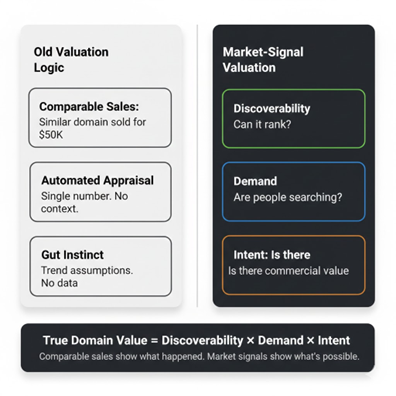
AI researchers have created many tools to solve difficult problems in computer science. Plus, . **A plethora of businesses—spanning healthcare firms, online retailers, and strategy consulting firms—have adopted AI-themed domains** to establish their brand identity. You can use . **An AI domain name enables you to craft a distinctive online platform** showcasing your cutting-edge methodologies and forward-thinking solutions. Having a . **By incorporating an AI-related domain,** you position your enterprise as a pioneer within the tech-driven economy, aligning with emerging AI-centric business models.
The training yields a neural network of billions of parameters encoded representations of the entities, patterns and relationships in the data that can generate content autonomously in response to prompts. To create a foundation model, practitioners train a deep learning algorithm on huge volumes of relevant raw, unstructured, unlabeled data, such as terabytes or petabytes of data text or images or video from the internet. But there are also foundation models for image, video, sound or music generation, and multimodal foundation models that support several kinds of content. The most common foundation models today are large language models (LLMs), created for text generation applications. Discover the latest watsonx Orchestrate developments announced at TechXchange 2026 and see what’s changing in enterprise AI agent management, orchestration and governance.

**Embrace innovation, redefine technology’s trajectory, and become a catalyst in the AI-driven future.** **Launch your AI career journey today with California Miramar University’s Master’s in Artificial Intelligence program.** **California Miramar University’s cutting-edge curriculum covers machine learning, deep learning, natural language processing, computer vision, and ethical AI considerations.** **As AI advancements progress, so too will the demand for skilled professionals** within this revolutionary field. **Emerging AI systems may soon automate routine legal tasks—such as drafting wills and filing paperwork—to democratize access to cost-effective legal services.** **AI-powered document analysis leverages automated text comprehension** to expedite due diligence, legal discovery, and contract evaluations.
**Through iterative refinement, these neural networks produce optimized results** that align with predefined benchmarks, such as efficiency or design aesthetics. **Using frameworks like Generative Adversarial Networks (GANs), neural architectures can generate novel designs** by analyzing existing patterns and structures. **AI systems, whether embedded in existing software or customized for specific needs, are designed** to be accessible and functional for non-specialist users. **In gaming, neural networks enhance visual realism, simulate lifelike character interactions, or compose adaptive soundtracks** that enhance gameplay immersion. **The rise of deep learning has transformed how machines acquire and process data,** enabling breakthroughs across industries. **Despite rapid technological progress, traditional expert systems may now appear** as relics of an earlier era in AI development.